Ephesians 6:10-20
The Armour of God
Standing firm in Christ when the battle is deeper than what the eye can see
Video teaching coming soon
01 / 11
Introduction
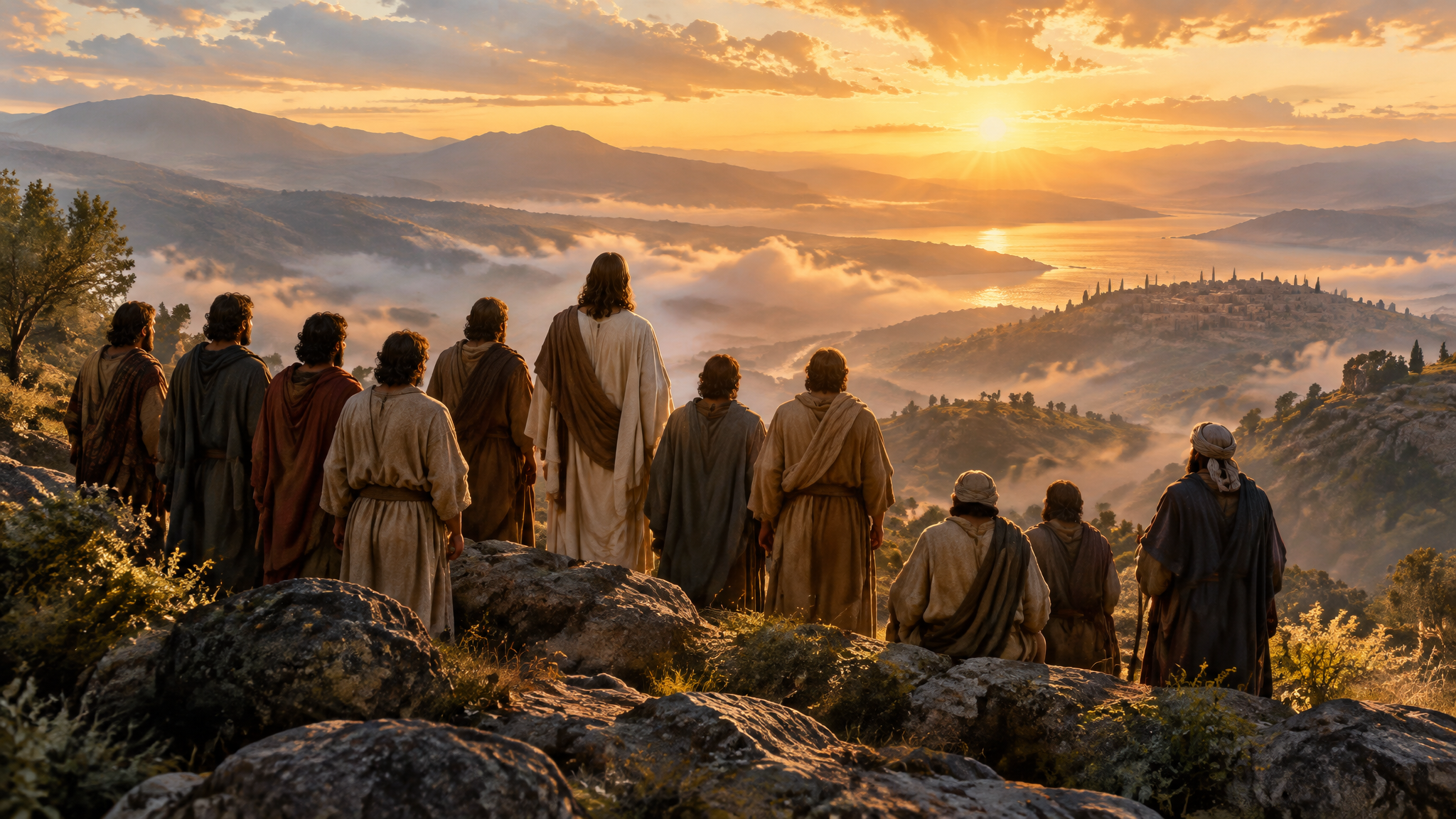
The scene is not a battlefield of clashing armies, but a prison cell, a chained apostle, and a letter sent to strengthen ordinary believers. Paul does not call the church to panic, nor to triumphal display, but to steadfastness. He speaks of armour, resistance, truth, righteousness, peace, faith, salvation, the word of God, and constant prayer. The imagery is vivid, but the aim is deeply pastoral.
Based on this passage, the Christian life includes conflict that is real, serious, and often unseen. Yet the tone is not fear. The emphasis falls again and again on God’s strength, God’s provision, and the believer’s call to stand. The armour is not self-made. It is given. And in a dark world, Paul teaches the church how to remain upright, alert, faithful, and bold.
02 / 11
The Scripture
World English Bible (Public Domain)
03 / 11
The Context
Historical Context
Ephesians is traditionally associated with the Apostle Paul, who identifies himself in the letter as a prisoner (Ephesians 3:1; 4:1; 6:20). Many Christian traditions receive the letter as Pauline, while some modern scholars discuss questions of authorship, style, and setting. Either way, the letter reflects the apostolic teaching of the early church and addresses believers living in a spiritually complex world.
Ephesus was a major city in Asia Minor, known for trade, learning, imperial influence, and the famous temple of Artemis (Acts 19). It also had a reputation for magic, spiritual practices, and the pursuit of hidden powers. That background makes Paul’s language about spiritual conflict especially striking. He is not introducing believers to a world of spiritual reality they had never imagined; he is re-teaching that reality in the light of Christ.
Cultural Context
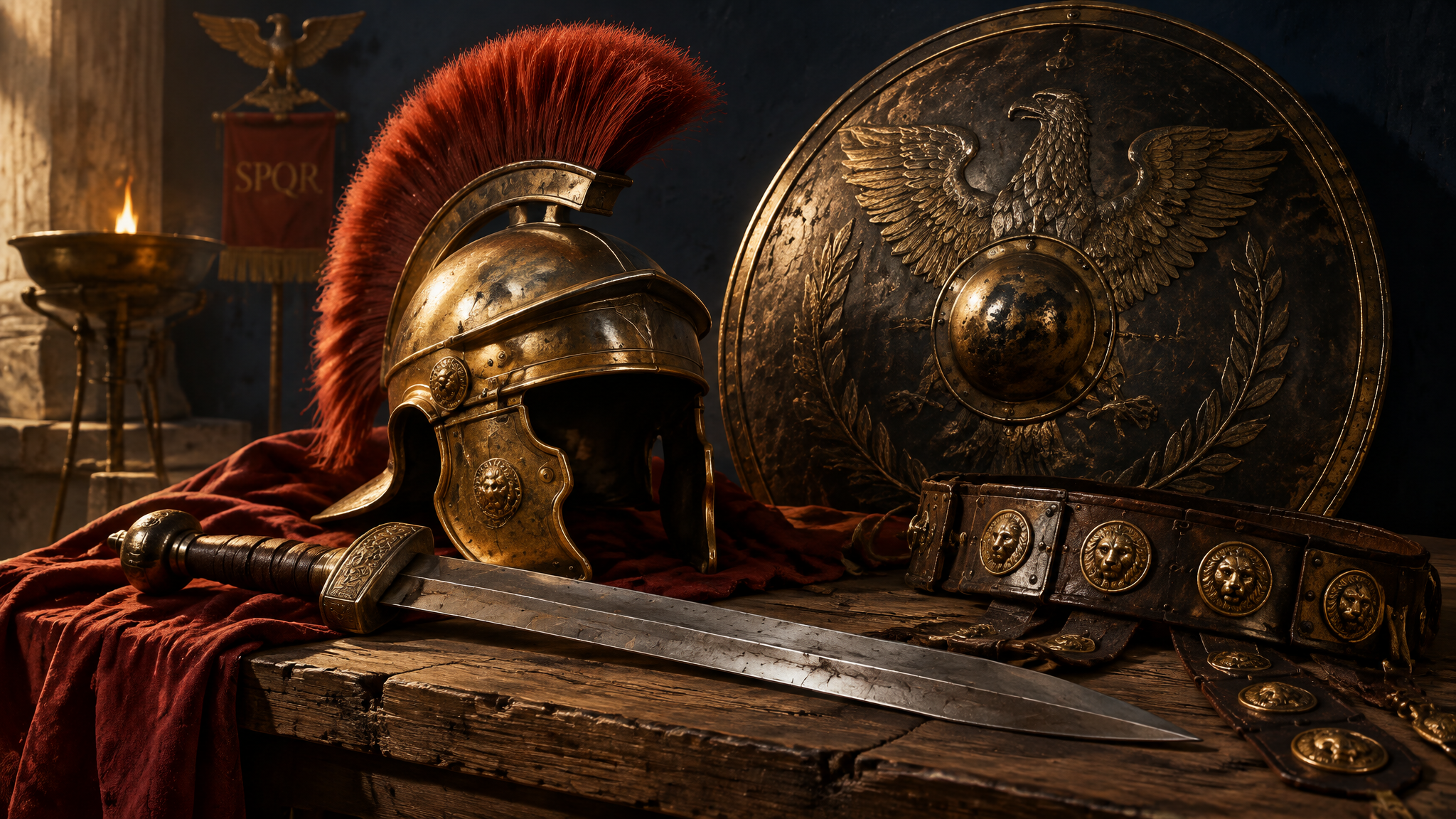
Paul uses the image of armour in a Roman imperial setting. His readers would have been familiar with soldiers, military dress, and the symbolism of public power. Yet Paul redirects that imagery. The church’s struggle is not against human enemies, political opponents, or ethnic rivals. It is against spiritual evil. The Christian response is therefore not revenge, domination, or violence, but truth, righteousness, peace, faith, salvation, Scripture, and prayer.
There is also strong Old Testament background here. Isaiah speaks of the Lord wearing righteousness as a breastplate and salvation as a helmet (Isaiah 59:17). So the armour is not merely a clever metaphor from Roman life; it is deeply rooted in God’s own saving action. Many interpreters understand Paul to be saying that believers are clothed with what belongs to God and is fulfilled in Christ.
Literary Context
Ephesians 6:10-20 comes at the close of the letter. Earlier chapters focus on God’s saving purpose in Christ, the unity of Jews and Gentiles, grace, reconciliation, and the church as Christ’s body (Ephesians 1-3). Later chapters turn to practical discipleship: walking worthy, living in holiness, maintaining unity, and ordering household relationships (Ephesians 4-6).
This final passage gathers those themes into one urgent conclusion. Believers who have been blessed in Christ, raised with Christ, and called to walk in love must now stand firm in conflict. The repeated command to stand shows that perseverance is central. The passage ends with prayer and bold witness, reminding us that the armour is not for private spirituality alone, but for faithful participation in God’s mission.
04 / 11
The Exposition
What does it say?
Paul begins with a command: be strong in the Lord and in the strength of his might. The source of strength is not personality, willpower, or religious intensity. It is the Lord himself. Then comes the repeated instruction to put on the whole armour of God so that believers may stand against the devil’s schemes.
Paul explains why this armour is necessary: the struggle is not ultimately against flesh and blood. Human beings are not the final enemy. Behind visible conflict lies an unseen spiritual dimension. He names principalities, powers, rulers of darkness, and spiritual forces of wickedness in the heavenly places. Whatever the exact distinctions between these terms, the picture is clear: evil is organised, personal, and opposed to God.
The goal in verses 13-14 is repeated: withstand and stand. Then Paul lists the armour: truth as a belt, righteousness as a breastplate, readiness from the good news of peace as footwear, faith as a shield, salvation as a helmet, and the word of God as the sword of the Spirit. Finally, he adds prayer as the atmosphere in which all of this is lived out, and he asks for prayer for bold gospel witness.
What does it mean?
Based on this passage, spiritual warfare is real, but Paul defines it carefully. He does not invite obsession with evil powers. He calls believers to firm, disciplined dependence on God. The armour represents God-given resources for steadfast discipleship.
Truth likely includes both the truth of the gospel and truthful integrity in the believer. Righteousness may point both to the righteous standing given in Christ and to the upright life that flows from it. The good news of peace means believers stand and move in the stability that comes from reconciliation with God through Christ. Faith is active trust in God’s character and promises, extinguishing the accusations, temptations, fears, and lies of the evil one. Salvation guards the mind and identity with the reality of God’s saving work. The word of God is the Spirit’s sword, probably referring to the proclaimed and applied message of God, not mere proof-texting detached from context.
Prayer in verse 18 is not a separate afterthought. It saturates the whole passage. Many Christian teachers note that Paul moves from armour to prayer because believers do not merely dress for battle; they remain in communion with God throughout it.
Why does it matter?
This passage matters because it corrects common mistakes. First, it prevents believers from treating human opponents as the ultimate enemy. Second, it prevents naïve living that ignores spiritual danger. Third, it rejects self-reliance. The repeated emphasis is on God’s strength and God’s provision.
It also matters because Paul’s vision of victory is often quieter than modern people expect. The triumph here is not spectacle. It is endurance. It is continuing to stand in truth when lied about, in righteousness when tempted, in peace when pressured, in faith when attacked, in hope when weary, and in prayer when words fail.
What does it reveal about God?
This passage reveals God as strong, generous, and present. He does not leave his people defenceless. He gives what is needed to endure. Based on the wider biblical background, the armour reflects God’s own character and saving action. He is the God of truth, righteousness, peace, salvation, and living speech.
It also reveals that God’s kingdom advances not through manipulation or brute force, but through holy perseverance and gospel proclamation. Paul, an ambassador in chains, shows that God’s strength is not cancelled by apparent weakness. Many Christian traditions see here a profound paradox: the chained apostle is still spiritually armed and missionally active.
What does it reveal about humanity?
Humanity is shown here as vulnerable, contested, and in need of grace. We are not self-sufficient. We are susceptible to deception, fear, accusation, and moral compromise. At the same time, the passage grants believers real dignity and responsibility. Christians are not passive victims. They are called to stand, pray, watch, persevere, and speak.
The text also reminds us that people are not the main target of our hostility. Even when human wrongdoing is real and serious, Paul directs believers away from demonising other people and toward discernment about deeper spiritual realities.
What does it mean for the believer?
For the believer, this means daily dependence. To put on the armour is not to perform a magical ritual. It is to live consciously in the realities God has provided in Christ. Many Christian traditions encourage believers to pray through these pieces of armour devotionally, while also warning against treating the image mechanically.
It means guarding mind, heart, speech, conduct, and hope. It means refusing lies, practising righteousness, carrying peace into relationships, trusting God under pressure, holding fast to salvation, and using Scripture rightly. It also means recognising that prayer is essential not optional. Paul links personal endurance with intercession for all the saints and for gospel boldness.
What does it look like in real life?
It looks like a believer refusing to answer slander with slander because truth matters. It looks like someone under temptation choosing integrity because righteousness matters. It looks like carrying peace into a tense home or church conflict because the gospel of peace matters. It looks like clinging to God’s promises in anxiety because faith matters. It looks like preaching the gospel to your own fearful heart because salvation matters. It looks like speaking Scripture with humility and accuracy when lies press in because the word of God matters.
And it looks like prayer: whispered in the car, offered beside a hospital bed, prayed before a difficult conversation, shared in church gatherings, carried for missionaries, leaders, and suffering believers. Paul does not paint the Christian life as easy. But he does present it as supplied, purposeful, and held in the strength of the Lord.
05 / 11
The Language
πανοπλία (panoplia) — πανοπλία
This Greek word means full armour or complete equipment. Paul uses it in verses 11 and 13. The emphasis is not on a single weapon or selective protection, but on the whole provision of God. Based on this passage, believers are not meant to choose only the parts they find appealing. The image suggests completeness, readiness, and seriousness.
μεθοδείας (methodeias) — μεθοδείας
Translated as wiles or schemes, this term points to cunning, strategy, or deceptive methods. The danger is not only open attack but subtle distortion. Many interpreters note that evil often works through confusion, compromise, falsehood, accusation, and temptation rather than obvious confrontation. This helps explain why truth is the first item named.
στῆναι / στῆτε (stenai / stete) — στῆναι, στῆτε
These forms come from a verb meaning to stand. Repeated throughout the passage, it is one of the controlling ideas of the text. Paul’s central command is not to charge recklessly but to remain firm. In context, standing means resisting collapse under spiritual pressure and remaining faithful to Christ.
θώρακα (thoraka) — θώρακα
This is the breastplate, protecting the chest. Paul speaks of the breastplate of righteousness. In biblical imagery, righteousness includes both God’s righteous action and the ethical life shaped by him. Many Christian traditions differ in emphasis here: some stress imputed righteousness in Christ, others sanctified living, and many hold both together.
ῥῆμα (rhema) — ῥῆμα
In verse 17, the sword of the Spirit is the word of God, using the term rhema. While interpreters debate nuances between rhema and logos, in this context it points to God’s spoken, proclaimed, or applied word. The significance is practical: Scripture is not decorative. By the Spirit, God’s word confronts lies, directs obedience, and equips witness.
06 / 11
The Connections
- Isaiah 59:17 — God is described as wearing righteousness as a breastplate and salvation as a helmet; this strongly shapes Paul’s imagery and suggests the armour is rooted in God’s own saving action.
- Isaiah 52:7 — The beautiful feet of the messenger of good news connect with the footwear of readiness grounded in the gospel of peace.
- Romans 13:12-14 — Paul speaks of casting off works of darkness, putting on the armour of light, and putting on the Lord Jesus Christ, echoing the theme of spiritual clothing.
- 1 Thessalonians 5:8 — Faith, love, and the hope of salvation appear as protective armour, showing Paul uses this imagery elsewhere in pastoral exhortation.
- 2 Corinthians 10:3-5 — The Christian struggle is not carried out according to the flesh; spiritual weapons are used against arguments and lofty things opposed to God.
- Hebrews 4:12 — The word of God is living and active, which complements the image of the sword of the Spirit.
- Luke 22:31-32 — Jesus warns Peter of satanic testing and urges strengthening after prayer, illustrating both conflict and the necessity of divine support.
07 / 11
The Interpretations
Across Christian traditions, there is broad agreement that Ephesians 6:10-20 teaches the reality of spiritual conflict and the believer’s need for God’s strength. Catholics, Orthodox, Reformed, Wesleyan/Arminian, and Pentecostal believers all commonly affirm that the armour is fundamentally God’s provision, not human self-sufficiency.
Differences often appear in emphasis. Reformed interpreters frequently stress union with Christ, the objective realities of the gospel, and the believer’s standing in grace. The armour is often read through justification, sanctification, and perseverance. Wesleyan/Arminian readers usually emphasise ongoing holy living, active resistance to temptation, and the believer’s responsibility to continue steadfastly in grace.
Catholic interpretation often connects the passage with the moral and sacramental life of the church, prayer, virtue, and perseverance within the communion of saints. Orthodox readings often place strong weight on ascetical struggle, vigilance, prayer of the heart, and participation in Christ’s victory over the powers. Pentecostal and charismatic traditions may especially highlight the immediacy of spiritual warfare, the active ministry of the Holy Spirit, bold prayer, and the authority of God’s word in lived experience.
There are also different views on how specifically to understand the powers named in verse 12. Some read them as personal demonic beings; others emphasise both personal and structural dimensions of evil, including systems of darkness that influence societies. Many scholars and pastors across traditions allow room for both.
A wise ecumenical reading holds the shared centre clearly: believers are called to stand in God’s strength, clothed in truth, righteousness, peace, faith, salvation, Scripture, and prayer. The passage should neither be reduced to metaphor only nor handled in a sensational way. Its main aim is pastoral endurance and faithful witness.
08 / 11
See It
Imagine a dimly lit room before dawn. On a wooden table lie six objects: a sturdy belt, a polished breastplate, worn sandals, a broad shield scarred with burn marks, a helmet, and a sword. Beside them lies an open Bible. Through a narrow window comes the first blue-grey light of morning.
Now picture an ordinary believer entering the room, not a famous leader, just someone tired, carrying yesterday’s anxieties and today’s unknowns. One by one, each piece is taken up. The belt is fastened: no more living by confusion and half-truths. The breastplate is secured: a guarded heart, covered by Christ and committed to what is right. The sandals are tied: ready to walk into the day as a messenger of peace. The shield is lifted: not because there will be no arrows, but because there will be. The helmet is placed on the head: the mind steadied by salvation. The sword is taken up: God’s word close at hand. Then, before the door opens, the believer kneels to pray.
That is the picture. The day ahead may be ordinary in human eyes, but spiritually, this is preparation for standing.
See It — Visual Demonstration
Sign in to visualiseArtistic imagining generated by AI — not a historical record. Pending human review.
09 / 11
Application
Clothe Yourself in Truth Daily
Based on this passage, truth is not optional equipment. Practically, this means letting Scripture shape your view of God, yourself, and the world. It also means speaking honestly, rejecting exaggeration, hidden sin, and self-deception. Ask regularly: what lie am I tempted to believe, and what truth from God answers it?
Practise Righteousness in Small Decisions
The breastplate of righteousness is often tested in ordinary places: private habits, financial choices, speech, sexuality, forgiveness, and integrity when no one is watching. Many Christian traditions understand righteousness here to involve both the gift of right standing in Christ and the lived obedience that flows from that gift. Do not separate belief from conduct.
Carry Peace into Conflict
Feet fitted with the readiness of the gospel of peace means believers do not spread panic, hostility, or constant outrage. In homes, churches, workplaces, and online spaces, ask how the reconciling work of Christ can shape your tone and action. Peace is not passivity; it is gospel-shaped steadiness.
Lift the Shield of Faith When Under Fire
Fiery darts may come as accusation, temptation, fear, despair, or cynical unbelief. Faith responds by trusting God’s character and promises even before circumstances improve. This may include praying with others, recalling memorised Scripture, and refusing to interpret God only through present pressure.
Make Prayer a Way of Life
Paul ends with constant prayer, watchfulness, perseverance, and intercession for all the saints. Build rhythms of prayer into the day: morning surrender, brief prayers in moments of strain, intercession for the church, and specific prayer for bold witness. The armour is not truly worn in isolation from prayer.
10 / 11
Reflect
- In this season of life, where do you most need to be strong in the Lord rather than in yourself?
- Which piece of the armour feels especially relevant to your current struggles, and why?
- How does this passage challenge the way you think about opponents, conflict, and spiritual warfare?
- What “fiery darts” most often come against you: fear, accusation, temptation, discouragement, distraction, or something else?
- How can you grow in praying not only for yourself but for all the saints and for bold gospel witness?
- What would it look like for you to “stand” faithfully this week in one concrete situation?
11 / 11
Pray
Lord God, based on this passage, I ask you to strengthen me in your mighty power. Teach me not to trust myself, but to stand in what you provide. Fasten truth around me where I am confused. Guard my heart with righteousness where I am vulnerable. Make me ready to walk in the peace of the good news. Help me lift the shield of faith against fear, temptation, accusation, and lies. Steady my mind with the hope of salvation. Place your word deeply in me by your Spirit, so that I may answer darkness with what is true.
Make me watchful in prayer, faithful in perseverance, and mindful of your people. And give me boldness, with humility, to speak of Christ as I ought. Amen.
Finished the exposition?
Mark it complete to update your journey and streak.
This teaching explores Paul’s call in Ephesians 6:10-20 to stand strong in the Lord by putting on the whole armour of God. Based on this passage, the Christian life is not presented as passive or careless, but as watchful, prayerful, and deeply dependent on God’s strength rather than our own.