Romans 8:28
God Working Through Circumstances
When the pieces seem scattered, God is not absent from the story.
Video teaching coming soon
01 / 11
Introduction
The phone call comes late. The plans unravel early. A prayer seems unanswered. A diagnosis, a betrayal, a delay, a closed door—life can feel like a room full of broken fragments, with no clear pattern and no obvious meaning. In moments like these, Romans 8:28 has often been quoted, sometimes tenderly and sometimes too quickly. Yet this verse is not a slogan for pretending everything is fine. It is a window into the steady, wise, purposeful work of God.
Based on this passage, Paul does not say that all things are good. He says that in all things, God is at work for good for those who love him and are called according to his purpose. This is a promise for stormy weather, not just sunny days. It teaches us to look beyond the surface of events and to trust the God who is still writing the story.
02 / 11
The Scripture
World English Bible (Public Domain)
03 / 11
The Context
Historical Context
Paul wrote Romans to Christians in Rome, likely in the mid-first century, at a time when the church was learning how to live as a diverse community of Jewish and Gentile believers under the power of the gospel. The letter addresses sin, grace, justification, life in the Spirit, and God’s saving purposes in history. Romans 8 stands near the emotional and theological high point of the letter. It speaks into the realities of suffering, weakness, waiting, and hope.
Romans 8:28 appears in a section where Paul is not discussing comfortable religion but the groaning of creation, the weakness of believers, and the Spirit’s help in prayer. That matters. This promise comes not in denial of hardship but in the middle of it.
Cultural Context
The Roman world valued status, power, control, and public honour. Suffering could be interpreted as shame, weakness, or even divine displeasure. Early Christians, however, often found themselves socially vulnerable. Some faced opposition, uncertainty, and hardship because of their allegiance to Jesus.
Against that background, Paul’s words are radical. He does not promise escape from difficulty or social success. Instead, he frames the believer’s life within God’s larger purpose. Many Christian readers have seen here a direct challenge to any worldview that treats circumstances as random, fate-driven, or finally sovereign. Paul places ultimate sovereignty not in empire, fortune, or human strength, but in the purposeful love of God.
Literary Context
Romans 8:28 must be read with the verses around it. In Romans 8:18–27, Paul speaks of present sufferings, creation’s groaning, the believer’s groaning, and the Spirit’s intercession. Then in Romans 8:29–30, he explains God’s purpose more specifically: conformity to the image of his Son. So the “good” of verse 28 is not merely temporary comfort, prosperity, or ease. In context, the good is closely tied to God’s saving plan to shape his people into Christlikeness and to bring them to final glory.
The flow continues into Romans 8:31–39, where Paul celebrates God’s unshakable love in Christ. That means Romans 8:28 is not an isolated proverb. It belongs to a larger argument: suffering is real, but it does not defeat God’s purpose; weakness is real, but the Spirit helps; opposition is real, but God’s love holds his people fast.
04 / 11
The Exposition
What does it say?
The World English Bible reads: “We know that all things work together for good for those who love God, for those who are called according to his purpose” (Romans 8:28). At the most basic level, Paul is expressing confidence. “We know” signals settled Christian assurance, not wishful thinking. He is not guessing. He is declaring something believers can rest in.
The verse includes several parts:
- “All things” — the full range of life’s circumstances.
- “Work together for good” — there is a purposeful outcome under God’s direction.
- “For those who love God” — this promise is relational, not abstract.
- “For those who are called according to his purpose” — God’s initiative stands behind the believer’s hope.
What does it mean?
Based on this passage and its context, Paul is not saying that every event is good in itself. Evil remains evil. Suffering still hurts. Loss is still loss. Scripture does not ask us to rename darkness as light. Rather, Paul teaches that God is able to take the whole fabric of a believer’s life—even pain, confusion, delay, and injustice—and weave it into a good purpose.
In the next verse, that purpose begins to come into focus: believers are being conformed to the image of God’s Son (Romans 8:29). So the “good” here is not mainly comfort, convenience, or worldly success. It is God’s redemptive aim to make his people more like Christ and to bring them finally into glory.
Some translations phrase the verse in a way that highlights God as the active subject. Many scholars understand the sense to be that God works in all things for good. That emphasis is important. Circumstances themselves do not possess healing wisdom. God does. Providence is not fate. It is the personal work of a wise and loving God.
Why does it matter?
This verse matters because life often appears fragmented. Without a larger frame, suffering can seem meaningless. Romans 8:28 offers not a simple explanation for every event, but a deep assurance that no part of a believer’s life is wasted in God’s hands.
This protects us from two errors:
- Despair, which says pain has the final word.
- Shallow optimism, which says pain is not really painful.
Paul avoids both. He acknowledges groaning and yet insists on hope. Christian faith is not blind positivity. It is confidence in God’s character and purpose.
What does it reveal about God?
This verse reveals a God who is sovereign, wise, and personally engaged. He is not distant from human struggle. Based on Romans 8 as a whole, God gives the Spirit, hears the groaning of his people, and directs history toward his saving purpose in Christ.
It also reveals God’s intentional love. His purpose is not mechanical. It is relational and redemptive. Many Christian traditions understand this verse as showing that God’s providence is neither cold nor arbitrary. He is not merely managing events; he is shaping a people who belong to him.
What does it reveal about humanity?
Human beings are shown here as limited in understanding. We do not always see how present events fit into God’s purpose. Earlier in the chapter, Paul says believers do not know how they ought to pray, and the Spirit helps in weakness (Romans 8:26). That means our perspective is partial.
At the same time, this verse describes believers as those who love God and are called according to his purpose. Love for God is part of the believer’s identity. Yet Paul also roots hope in God’s calling, reminding us that salvation rests finally in God’s gracious action rather than in human control.
What does it mean for the believer?
For the believer, Romans 8:28 means that hardship is not evidence that God has abandoned his work. It means delays are not necessarily denials of purpose. It means suffering can become a place where God forms endurance, deepens trust, strips away false securities, and makes Christ more visible in us.
This does not mean every believer will understand the reason behind each event in this life. Often we will not. The promise is not full explanation but divine purpose. We walk by trust in God’s character, not by total clarity about his methods.
Many Christian pastors and teachers wisely caution against using this verse carelessly around fresh grief. It should be offered with compassion, patience, and tears. Paul’s promise is strong, but it is not meant to silence lament. Biblical hope and honest sorrow belong together.
What does it look like in real life?
It may look like Joseph, betrayed by his brothers, later seeing that God used evil for preservation and life (Genesis 50:20). It may look like a season of illness that slows a person enough to rediscover prayer, community, and dependence on God. It may look like disappointment that closes one path and opens another more fruitful one years later.
It may also look quieter than dramatic testimony suggests. Sometimes God’s working through circumstances appears in small ways:
- patience formed through waiting,
- compassion formed through suffering,
- humility formed through failure,
- perseverance formed through repeated trial,
- hope formed through learning to cling to Christ.
In real life, Romans 8:28 does not mean every chapter feels good. It means the Author is good. And because he is good, those who love him can trust that even now, in ways seen and unseen, he is working through circumstances toward his holy and gracious purpose.
05 / 11
The Language
πάντα (panta) — πάντα
This Greek term means “all things.” It is broad and comprehensive. Based on this passage, Paul is not limiting God’s work to obviously spiritual moments or pleasant seasons. “All things” includes joys and sorrows, successes and failures, clarity and confusion. The significance is not that every individual event is morally good, but that no part of life lies outside God’s ability to work purposefully.
συνεργεῖ (synergei) — συνεργεῖ
This verb means “works together” or “co-operates toward.” It carries the idea of multiple elements being brought into meaningful relation. Many scholars note that the sense here is that God brings the various circumstances of life together toward a good end. This supports a doctrine of providence: God is not passively observing events but actively ordering them toward his purpose.
ἀγαθόν (agathon) — ἀγαθόν
This word means “good.” In Romans 8, the good is defined by context, especially the believer’s conformity to Christ and future glorification. So “good” should not be reduced to comfort, wealth, or immediate relief. Many Christian traditions understand this as a deeply theological good: what serves God’s redemptive aim in his people.
ἀγαπῶσιν (agapōsin) — ἀγαπῶσιν
This term means “those loving” or “those who love.” It describes believers relationally. Christianity is not merely agreement with doctrines but a life oriented toward God in love. In Scripture, love for God is both a response to grace and a mark of genuine belonging to him.
κλητοῖς / πρόθεσιν (klētois / prothesin) — κλητοῖς / πρόθεσιν
These terms mean “called” and “purpose.” “Called” points to God’s initiative; “purpose” points to his intentional design. Together they stress that the believer’s life is not random. Based on Romans 8:29–30, God’s call is tied to his saving plan in Christ. The promise of verse 28 rests not on chance but on the steadfast purpose of God.
06 / 11
The Connections
- Genesis 50:20 — Joseph recognises that human evil intended harm, but God used the situation for a saving good; this is one of Scripture’s clearest parallels to Romans 8:28.
- Psalm 34:19 — The righteous face many troubles, yet the Lord delivers; this connection reminds us that faith does not remove affliction.
- Isaiah 46:9–10 — God declares the end from the beginning and accomplishes his purpose, supporting the theme of divine sovereignty.
- Romans 8:18 — Present sufferings are not worth comparing with coming glory; verse 28 belongs within this wider argument of suffering and hope.
- Romans 8:29–30 — These verses define the “good” in part as conformity to Christ and locate it within God’s saving purpose.
- 2 Corinthians 4:17 — Present affliction is producing an eternal weight of glory; Paul again joins hardship with God’s larger redemptive outcome.
- James 1:2–4 — Trials can produce steadfastness and maturity; while the framing differs, the connection lies in God’s use of difficulty for spiritual formation.
07 / 11
The Interpretations
Across major Christian traditions, there is broad agreement that Romans 8:28 teaches God’s providential work on behalf of his people, especially in suffering. Most traditions also agree that the “good” should not be reduced to material success or a pain-free life.
Catholic interpreters often read this verse within the wider doctrine of providence and sanctification. God works through created realities, human freedom, suffering, and grace to draw believers toward holiness and final union with Christ.
Orthodox Christians commonly stress synergy in the life of salvation—not in the sense that humans save themselves, but that God’s grace and human response are not opposed. This verse is often read in a deeply pastoral way: God works through the believer’s whole journey, including suffering, toward theosis, participation in the life of Christ.
Reformed traditions strongly emphasise God’s sovereignty and effectual calling. Many Reformed readers connect this verse closely with Romans 8:29–30 and see in it a firm assurance that God ordains and governs all things for the ultimate good of the elect.
Wesleyan/Arminian traditions also affirm providence and God’s purpose, while often placing more stress on the relational description “those who love God” and on the believer’s continued response to grace. They tend to highlight that the promise belongs within a living, persevering relationship with God.
Pentecostal readers often receive this verse as a source of hope in trials and spiritual warfare, emphasising God’s active power to bring redemption out of painful circumstances. In healthy Pentecostal interpretation, this is not a denial of suffering but confidence that God is still at work through it.
The main difference among traditions is not whether God works for good, but how they explain the relation between divine sovereignty, human freedom, and God’s calling. Even so, there is substantial shared ground: God is faithful, suffering is not meaningless, and Christ is the pattern and goal of the believer’s life.
08 / 11
See It
Imagine standing before a vast tapestry hanging in a dimly lit hall. Up close, all you can see are knots, loose threads, dark strands, abrupt colour changes, and sections that seem chaotic. Some threads are rough and frayed, others appear out of place. If you judged the work from inches away, you might call it confused or unfinished.
Then you begin to step back. Slowly a pattern emerges. The dark threads were not mistakes; they gave depth to the brighter ones. The broken-looking lines were part of a larger design. Colours that clashed up close now belong together in a picture far bigger than you first realised.
Romans 8:28 is like that step backward—not because we can suddenly explain every pain, but because we are reminded that God sees the whole design. Our lives often feel like the underside of the tapestry: tangled, uneven, and hard to interpret. But based on this passage, God sees the finished work. He is not improvising in panic. He is weaving with purpose. The believer may not yet see the full pattern, but can trust the Weaver.
See It — Visual Demonstration
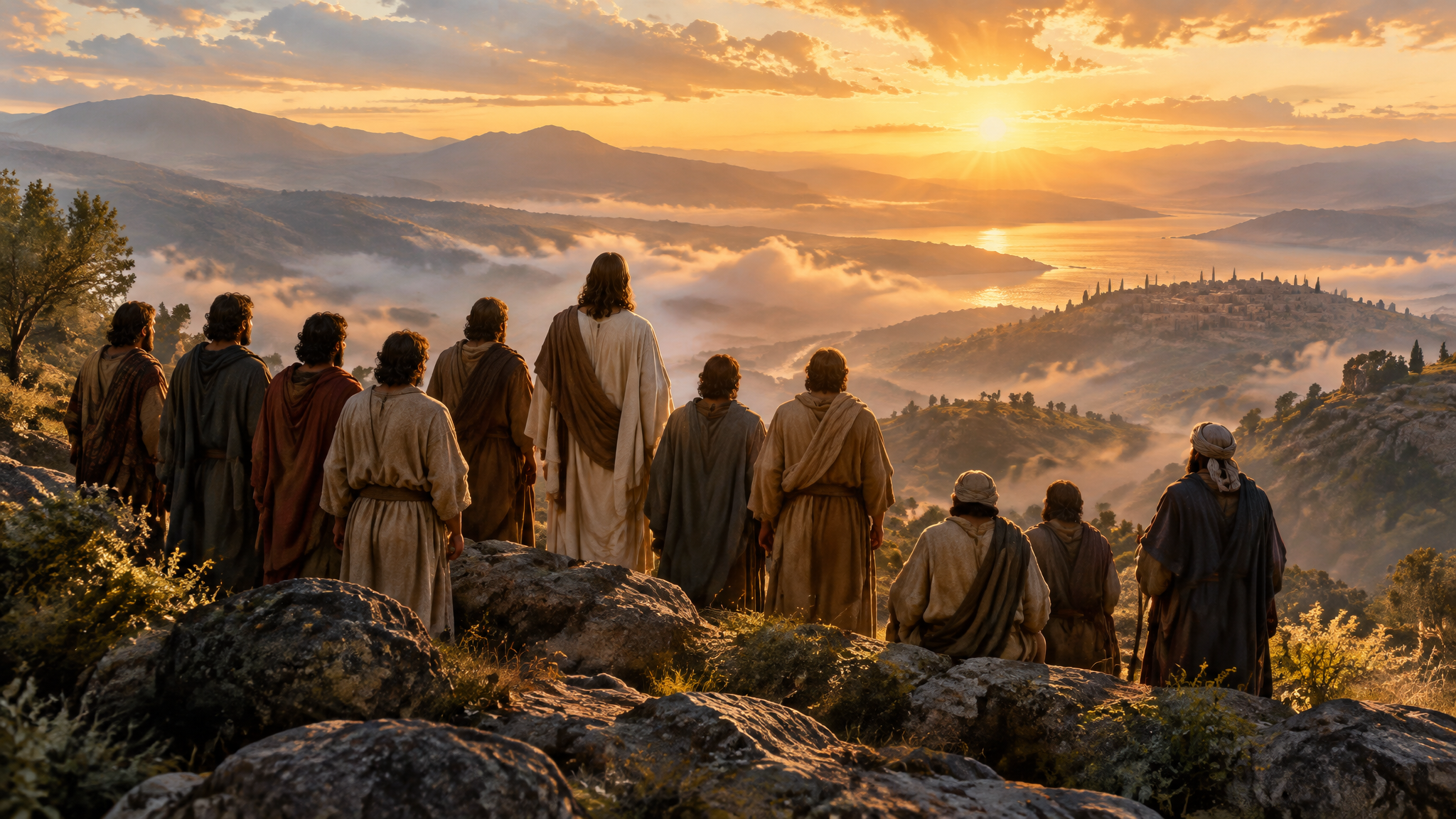
Sign in to visualiseArtistic imagining generated by AI — not a historical record. Pending human review.
09 / 11
Application
Name pain honestly before God
Romans 8:28 does not require pretending that hardship is pleasant. Bring the real circumstance before God in prayer. Tell the truth about grief, anger, fear, or confusion. Biblical faith makes room for lament. Honest prayer is not unbelief; it is often the place where trust begins to deepen.
Redefine “good” by Scripture, not comfort
Ask: what if God’s primary good in this season is not ease, but Christlikeness? This can change how we interpret delay, suffering, and disappointment. Based on Romans 8:29, seek the good of becoming more like Jesus—growing in patience, holiness, courage, compassion, and hope.
Look for God’s work in small transformations
Not every circumstance will produce a dramatic testimony. Pay attention to quieter evidence of grace: increased endurance, softened pride, renewed prayer, deeper empathy, stronger dependence on the Spirit, restored priorities. These are often signs that God is working through circumstances even before outcomes change.
Resist isolated living
Suffering tempts people to withdraw. Yet God often works through his people as part of his providence. Invite trusted believers to pray, listen, and walk with you. The church cannot explain every mystery, but it can bear burdens and witness to God’s faithfulness together.
Hold hope without forcing answers
You may not know why a particular event has happened. Do not rush to invent explanations God has not revealed. Instead, hold firmly to what this passage does say: God is at work for good for those who love him and are called according to his purpose. Trust can be real even when understanding is partial.
10 / 11
Reflect
- When you hear “all things work together for good,” what kinds of circumstances are hardest for you to include in that phrase?
- How does the surrounding context of suffering, groaning, and hope change the way you read Romans 8:28?
- In what ways have you seen God bring spiritual fruit out of a painful or confusing season?
- How might your perspective change if the “good” in this verse is primarily conformity to Christ rather than immediate comfort?
- Are you currently demanding explanations from God when he may be inviting you to trust his character instead?
- Who could help carry your present burdens and remind you of God’s purpose in this season?
11 / 11
Pray
Father, you are wise when I am confused, steady when I am shaken, and good when life feels hard to understand. I bring before you the circumstances I would never have chosen. Based on your word, I ask for grace to trust that you are able to work through every part of my life for your good purpose.
Teach me not to call evil good, but to believe that evil does not have the final word. Form Christ in me through this season. Help me love you, follow you, and rest in your calling. Where I am weak, strengthen me by your Spirit. Where I am fearful, anchor me in your promises. And where I cannot yet see the pattern, help me trust your heart. In Jesus’ name, amen.
Finished the exposition?
Mark it complete to update your journey and streak.
This teaching explores Romans 8:28 in its biblical context and shows how Paul’s words offer deep hope without denying pain. Based on this passage, believers are invited to trust that God is able to work through every circumstance for his good purpose in Christ.