John 15:1-17
Abiding in Christ
The life of the branch flows only from the living Vine
Video teaching coming soon
01 / 11
Introduction
Night has fallen over Jerusalem. The air is heavy with the nearness of the cross, though the disciples do not yet grasp how close it is. Jesus is speaking tenderly, urgently, as a teacher preparing his friends for life without his visible presence. In that setting, he reaches for an image they would recognise at once: a vine, branches, a gardener, fruit, pruning. It is earthy, ordinary, and unforgettable.
Yet this is far more than gardening language. Jesus is explaining how spiritual life actually works. Strength will not come from self-effort. Fruit will not come from religious performance. Endurance will not come from good intentions alone. Based on this passage, the Christian life is sustained by union with Christ. To abide in him is to receive life, to be shaped by love, and to become people through whom the Father is glorified.
02 / 11
The Scripture
World English Bible (Public Domain)
03 / 11
The Context
Historical Context
John 15 stands within Jesus’ farewell teaching in John 13-17, given on the night before his crucifixion. He is preparing the disciples for his departure, their coming sorrow, and their future mission. Throughout these chapters, Jesus speaks about love, obedience, the Holy Spirit, persecution, prayer, and joy. This vine passage is therefore not an isolated saying but part of a final pastoral conversation.
In the Old Testament, Israel is often described as a vine or vineyard planted by God, for example in Psalm 80, Isaiah 5, and Jeremiah 2. In many of those passages, the vine fails to produce good fruit. When Jesus says, "I am the true vine" (John 15:1), many scholars understand him to be presenting himself as the faithful and fruitful fulfilment of what Israel was called to be. Life with God is now centred in him.
Cultural Context
Viticulture was common in the ancient Mediterranean world. People knew that healthy vines required patient care. Branches had to remain connected to the vine to live. Fruitful branches needed pruning so that growth would become stronger and more productive. Unfruitful wood from grapevines had little value apart from being discarded.
This helps the imagery land with force. Jesus is not using abstract philosophy. He is drawing on visible, daily realities. His listeners would understand that fruit is the natural outcome of life and health, not something stapled onto a dead branch.
Literary Context
This passage moves in a clear progression. First, Jesus identifies the key figures: the true vine, the Father as the farmer, and the disciples as branches (vv. 1-5). Second, he gives both promise and warning: fruit comes through abiding, while severance leads to withering (vv. 6-8). Third, he deepens the theme by connecting abiding with love, obedience, joy, and friendship (vv. 9-15). Finally, he grounds the disciples’ calling in his initiative: he chose and appointed them to bear lasting fruit (vv. 16-17).
The repeated word “remain” or “abide” is central. It acts like the heartbeat of the passage. Based on the flow of the text, abiding is the organising reality behind fruitfulness, prayer, joy, obedience, mission, and mutual love.
04 / 11
The Exposition
What does it say?
Jesus declares, “I am the true vine, and my Father is the farmer” (v. 1). The disciples are branches, entirely dependent on the vine for life. Fruitless branches are taken away, while fruitful branches are pruned so they can bear more fruit (v. 2). Jesus tells the disciples they are already “pruned clean” because of his word (v. 3), then commands them to remain in him (v. 4).
He explains the image plainly: apart from him they can do nothing of lasting spiritual value (v. 5). Those who do not remain in him wither like discarded branches (v. 6). Those who do remain, with his words remaining in them, are invited into confident prayer (v. 7). The Father is glorified when disciples bear much fruit (v. 8).
Then Jesus connects abiding to love. As the Father has loved him, so he has loved them; they are to remain in that love (v. 9). This is expressed through obedience, following the pattern of Jesus’ own obedience to the Father (v. 10). The result is joy made full (v. 11). The central command is mutual love shaped by Christ’s own sacrificial love (vv. 12-13). Jesus calls them friends because he has made known to them what he heard from the Father (vv. 14-15). He chose and appointed them to bear lasting fruit, and again links that calling with prayer in his name (v. 16). The section closes where it has been building all along: “love one another” (v. 17).
What does it mean?
Based on this passage, abiding in Christ means living in ongoing communion, dependence, and responsiveness to him. It is relational, not mechanical. Jesus does not call his disciples merely to imitate him from a distance but to remain in him as branches remain in a vine.
Fruit here likely includes Christlike character, obedient living, effective witness, answered prayer aligned with God’s will, and love within the believing community. Different interpreters may emphasise different aspects, but the passage itself connects fruit with obedience, prayer, joy, and love.
Pruning suggests that even fruitful believers undergo painful processes of refinement. The text does not present hardship as proof of abandonment. In fact, many Christian readers understand pruning as the Father’s active care, removing what hinders greater fruitfulness.
The warnings in verse 6 have been read in different ways. Some traditions understand this as a genuine warning to professing believers against falling away. Others understand it as exposing those who appear connected outwardly but lack true, saving union with Christ. What is clear in the passage itself is that life, fruit, and perseverance are found only in continued connection to Jesus.
Why does it matter?
This passage matters because it challenges both self-reliance and shallow religion. Modern life rewards productivity, image, and independence. Jesus speaks a different word: apart from me you can do nothing. That is humbling, but also freeing. The burden of producing spiritual life by sheer effort is lifted.
It also matters because Jesus defines discipleship in relational terms. Christianity is not sustained merely by information, habits, or public identity. These may serve the life of faith, but they cannot replace communion with Christ.
What does it reveal about God?
The passage reveals the Father as wise gardener. He is not absent from the disciple’s growth. He tends, prunes, and seeks fruit that glorifies him. It reveals the Son as the true source of life. Jesus is not one helpful support among many; he is the vine itself. It also reveals the intimacy within God’s saving work: the Father loves the Son, the Son loves his disciples, and believers are drawn into that circle of love.
Many Christian traditions also see here a glimpse of God’s generosity. The Lord does not merely tolerate disciples; Jesus calls them friends and shares the Father’s purposes with them.
What does it reveal about humanity?
Human beings are shown to be dependent, not self-generating. We do not create spiritual life from within ourselves. The image of the branch rules out boasting. At the same time, humanity is shown to be capable of genuine fruitfulness when united to Christ. The branch is not the source, but it is truly involved in bearing fruit.
The passage also reveals our need for cleansing, guidance, and transformation. Left to ourselves, we wither. In Christ, we can love, obey, pray, and endure.
What does it mean for the believer?
For the believer, abiding means staying near to Christ through his word, prayer, obedience, and dependence on the Spirit. Verse 7 is especially important: abiding is linked with Christ’s words remaining in us. This suggests that communion with Jesus is not vague spirituality. It is shaped by what he has spoken.
Abiding also means receiving Christ’s love rather than trying to earn it. Obedience matters deeply, but in this passage obedience is not a ladder to climb into love. It is the pathway of remaining in the love Christ has already set upon his people.
What does it look like in real life?
It looks like a believer opening Scripture not merely to complete a task, but to hear and receive the words of Christ. It looks like prayer becoming less about control and more about alignment. It looks like accepting seasons of pruning without assuming God has left. It looks like choosing costly love within the church: forgiving, serving, listening, giving, and staying.
It also looks like mission. Jesus appoints his people to “go and bear fruit” (v. 16). Abiding is not retreat from the world; it is the source of faithful engagement in it. A branch truly attached to the vine does not strain to appear alive. Life flows, and fruit appears in season.
05 / 11
The Language
μένω (menō) — μένω
This Greek verb is often translated remain, abide, or stay. It is the key word in John 15, repeated again and again. Its significance is relational and continual. Jesus is describing an ongoing condition rather than a momentary spiritual feeling. Based on this passage, abiding means continuing in living union with Christ, not merely visiting him occasionally in devotion.
ἄμπελος (ampelos) — ἄμπελος
This means vine. When Jesus says, “I am the true vine,” the word carries rich biblical resonance. Many scholars connect it to Old Testament vine imagery for Israel. The significance is that Jesus embodies in himself the faithful people of God and becomes the source of covenant life for his disciples.
κλῆμα (klēma) — κλῆμα
This word means branch. In the image, the branch has no independent life-source. Its role is to remain connected and so bear fruit. Theologically, this underlines dependence. The branch is not useless because it is a branch; it becomes fruitful precisely by receiving from the vine.
καθαίρω (kathairō) / καθαρός (katharos) — καθαίρω / καθαρός
In verse 2, the Father “prunes” fruitful branches; in verse 3, Jesus says the disciples are already “clean.” These words are closely related in Greek. John appears to use a meaningful wordplay: the cleansing word of Jesus and the pruning work of the Father belong together. The significance is that God’s sanctifying work is both corrective and life-giving.
ἀγάπη (agapē) / ἀγαπάω (agapaō) — ἀγάπη / ἀγαπάω
These terms refer to love, especially in the sense emphasised throughout John’s Gospel. In this passage, love is not reduced to sentiment. It is seen in the Father’s love for the Son, the Son’s love for the disciples, and the disciples’ call to love one another sacrificially. Many Christian traditions understand this as covenantal, self-giving love shaped supremely by Christ’s laying down his life.
06 / 11
The Connections
- Psalm 80:8-9, 14-15 — Israel is pictured as a vine brought out of Egypt; this forms part of the biblical background for Jesus calling himself the true vine.
- Isaiah 5:1-7 — The song of the vineyard shows God’s disappointment with unfruitful Israel, helping readers see the force of Jesus as the faithful vine.
- Jeremiah 2:21 — God speaks of planting a choice vine that turned degenerate; this strengthens the theme of failed fruitfulness apart from covenant faithfulness.
- John 13:34-35 — Jesus commands his disciples to love one another; John 15 develops that same command as central to abiding.
- John 14:23 — Jesus speaks of those who love him keeping his word, linking obedience, love, and divine indwelling.
- Galatians 5:22-23 — Paul’s “fruit of the Spirit” offers a helpful New Testament picture of the kind of character that grows from life in Christ.
- 1 John 2:24-28 — The language of abiding appears again, showing that remaining in Christ and in the apostolic message is central to perseverance.
07 / 11
The Interpretations
Across major Christian traditions, there is broad agreement that John 15 teaches union with Christ, the necessity of spiritual fruit, the Father’s sanctifying work, and the command to love one another. All affirm that life and fruitfulness come from Jesus rather than human self-sufficiency.
Differences arise especially around the warning passages. Reformed readers often emphasise that truly regenerate believers will persevere by God’s grace; therefore the fruitless branches may be understood as those outwardly associated with Christ but not inwardly united to him. Wesleyan/Arminian traditions more commonly read the warnings as genuine cautions addressed to believers, stressing the need to continue in faith and obedience. Pentecostal interpreters often share that emphasis while highlighting experiential abiding through the Holy Spirit’s empowering presence.
Catholic and Orthodox traditions strongly emphasise abiding as participatory communion with Christ, expressed through faith, obedience, prayer, sacramental life, and growth in love. They commonly read pruning in connection with sanctification, purification, and maturation in holiness. Reformed traditions also stress sanctification, though often with stronger language about Christ as the sole ground of fruit and assurance.
On verse 7 and answered prayer, traditions largely agree that Jesus is not endorsing unchecked desire. Rather, many Christian traditions understand prayer here as shaped by abiding, so that the disciple’s desires are increasingly formed by Christ’s words and will.
On friendship with Jesus, traditions generally agree that this is a remarkable expression of intimacy and revelation, though never equality with Christ. The consensus reading is that disciples are brought near, entrusted with his words, and commissioned into loving obedience.
08 / 11
See It
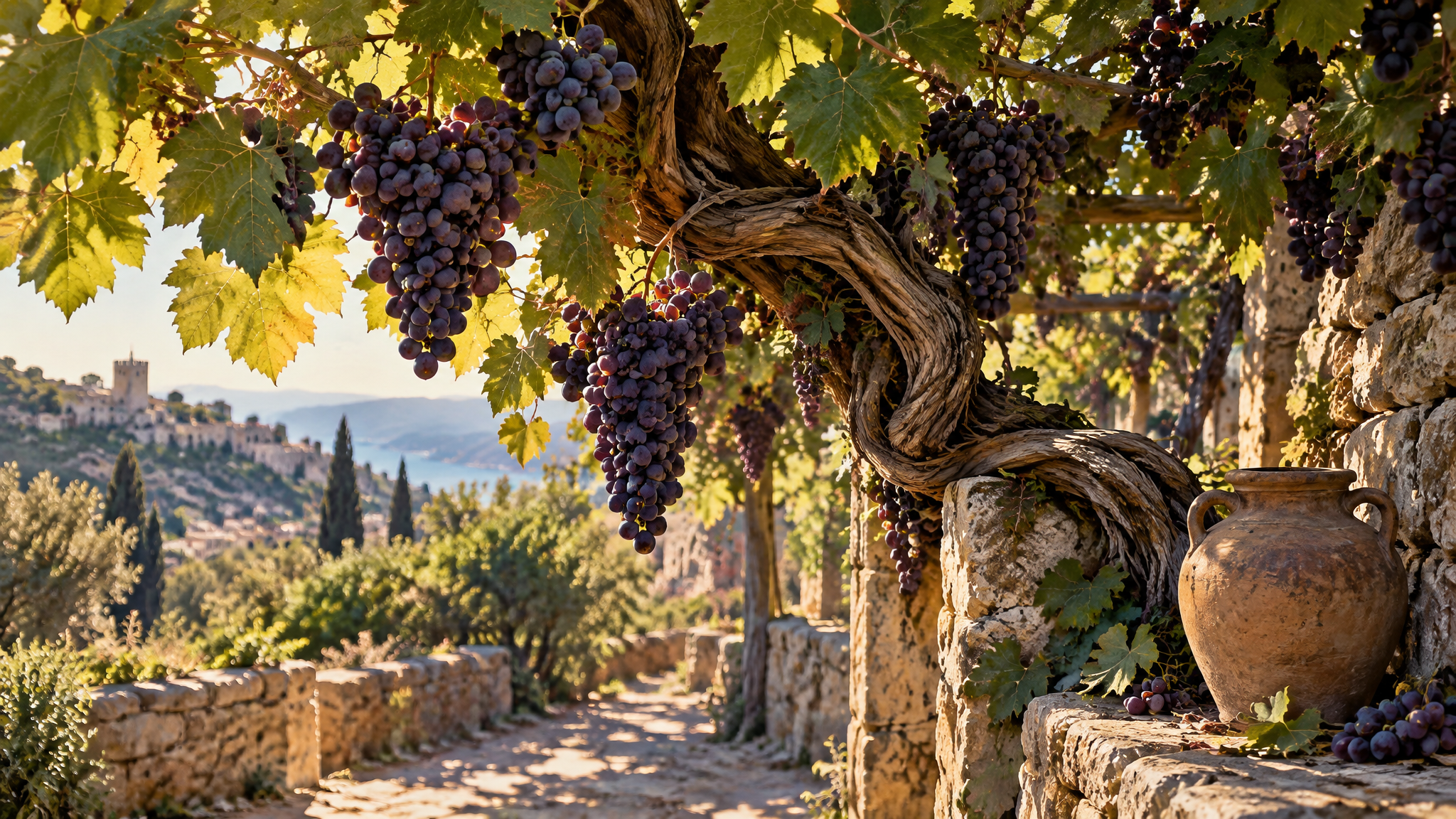
Imagine a vineyard at first light. Rows of twisting vines run across a hillside, their leaves catching the soft gold of the morning. In your hand is a cut branch. For a moment it looks almost alive, but already it is drying, brittle at the edge, unable to produce anything by itself. Then look again at a branch still joined to the vine. Sap moves invisibly through it. Clusters begin to swell. Life is hidden, but the fruit will make it visible.
Now picture the gardener moving carefully down the row with a knife. He does not slash wildly. He examines, lifts, trims, removes what will hinder, and tends what he loves. Some cuts seem severe, yet they are purposeful. The vine is not being destroyed; it is being prepared for greater fruitfulness.
Finally, hear Jesus speaking these words to his disciples like a final gift before the cross. The lesson becomes clear: abiding is not dramatic striving but staying connected. The branch does not panic its way into fruit. It receives. It remains. And in time, what is invisible within becomes visible without.
See It — Visual Demonstration
Sign in to visualiseArtistic imagining generated by AI — not a historical record. Pending human review.
09 / 11
Application
Stay in the words of Christ
Verse 7 links abiding with Christ’s words remaining in us. A practical response is to build regular habits of Scripture intake: reading, meditation, memorisation, and prayerful reflection. Not as a box-ticking exercise, but as a way of staying where Christ’s voice can shape the heart.
Reframe pruning seasons
Based on this passage, not every painful season means God is distant. Some experiences of loss, correction, waiting, or exposure may become instruments of pruning. This does not explain every suffering simplistically, but it does encourage believers to ask, with humility, how God may be deepening faith and fruit through difficulty.
Measure life by fruit, not appearance
Jesus speaks repeatedly about fruit. That invites honest self-examination. Am I growing in love, obedience, dependence, prayer, and Christlike character? Fruit usually develops gradually. The goal is not performance for others, but evidence of life from Christ within.
Practise costly love in community
The command to love one another stands at the centre of the passage. This means moving beyond warm feelings into concrete action: forgiving an offence, bearing another’s burden, making time for the lonely, speaking truth gently, and serving without applause. Many Christian traditions see this mutual love as one of the clearest signs of genuine discipleship.
Pray from abiding, not merely for outcomes
Jesus connects abiding with effective prayer. One practical step is to let Scripture guide prayer, asking not only for personal desires but for the kinds of fruit Jesus names here: love, endurance, obedience, joy, and God-glorifying witness. As desires are formed by Christ’s words, prayer becomes more aligned with his heart.
10 / 11
Reflect
- Where in your life are you tempted to function as though you can do much apart from Christ?
- What kinds of “fruit” does this passage highlight, and which of them do you most long to see grow?
- Have you experienced a season that felt like pruning? Looking back, what might God have been doing in it?
- In what practical ways are Christ’s words remaining in you at present?
- How does Jesus’ command to love one another challenge your current relationships in the church or family?
- What might it mean for your prayers to flow more directly from abiding in Christ?
11 / 11
Pray
Father, thank you that Jesus is the true vine and that life is found in him. Teach me to remain in Christ, not in a hurried or shallow way, but with trust, obedience, and love. Let his words remain in me and shape my desires, my prayers, and my choices. Where I need pruning, give me humility and endurance. Where I have been self-reliant, bring me back to dependence on your Son. Grow in me the fruit that glorifies you: love, obedience, joy, and faithful witness. Help me love others as Christ has loved me. Keep me near to him, and let my life bear fruit that remains. Amen.
Finished the exposition?
Mark it complete to update your journey and streak.
In John 15:1-17, Jesus invites his disciples into a life of deep dependence, steady obedience, and fruitful love. Based on this passage, abiding in Christ is not passive spirituality but a living relationship in which his words, love, joy, and mission reshape the whole person.